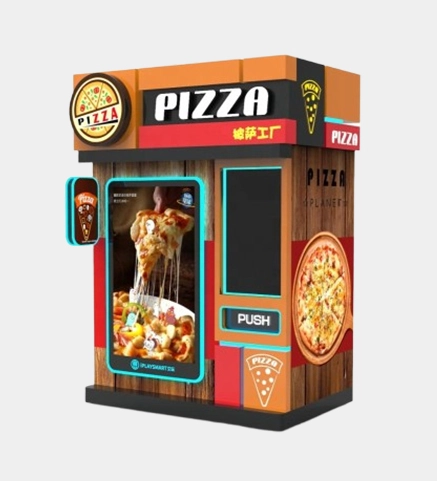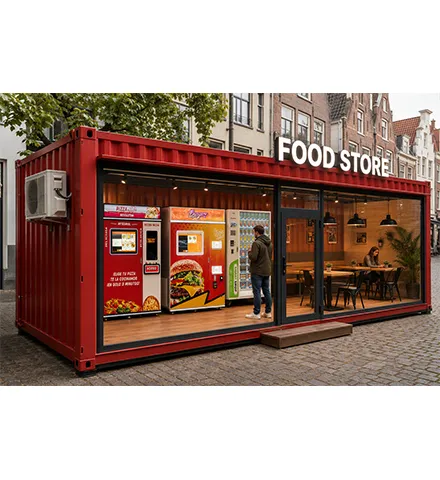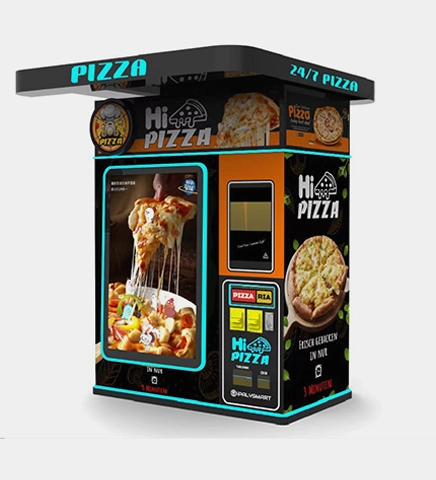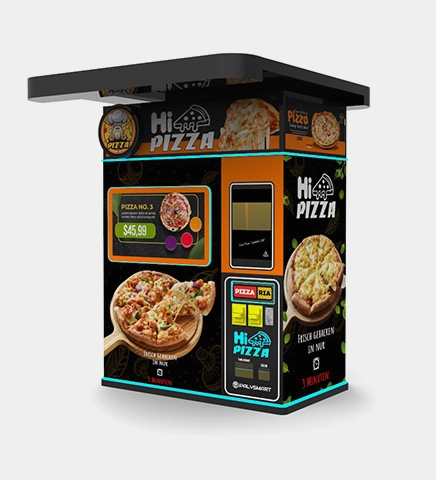
Consumer expectations around food have shifted dramatically. People no longer want to wait in line, sit down, or plan their day around a restaurant's opening hours. They want hot, freshly baked food — fast, at any hour, wherever they happen to be. This shift has pushed food retail toward automation, and among the many automated formats emerging, the pizza vending machine has become one of the most commercially viable. What was once a novelty is now a serious business model, and the technology behind it has evolved far beyond simply reheating a frozen snack.
For entrepreneurs and distributors evaluating this space, the question is no longer whether automated pizza retail works — it is which machine technology actually delivers on the promise of speed, taste, and reliability. That is where dual-oven engineering enters the picture.
The Real Reason Investors Are Paying Attention
Automated food retail has matured. The early machines on the market could store and heat a pizza, but the results were inconsistent — uneven crusts, long wait times, and limited menu sizes. What has changed is the cooking technology itself.
Today's leading pizza vending machines are built around two priorities: speed of service and quality of output. A machine that takes five minutes to produce a mediocre pizza will not build repeat customers, no matter how convenient the location. A machine that produces a crispy, properly baked pizza in around 90 seconds changes the economics entirely — higher throughput per hour, shorter queues, and a product customers are willing to buy again.
This is why serious buyers now look closely at the oven system before anything else.
Dual-Oven Engineering: Hot Air Circulation + Microwave Molecular Heating
Our pizza vending machine uses a dual-function oven that combines two distinct heating technologies in a single baking chamber.
Hot air circulation handles the browning and crisping. It moves heated air evenly around the pizza, mimicking the convection effect of a professional deck oven. The result is a golden, crunchy crust rather than a soggy one.
Microwave molecular heating handles the speed. It penetrates the frozen product and rapidly defrosts it from the inside, so the baking process does not waste time thawing before it can cook.
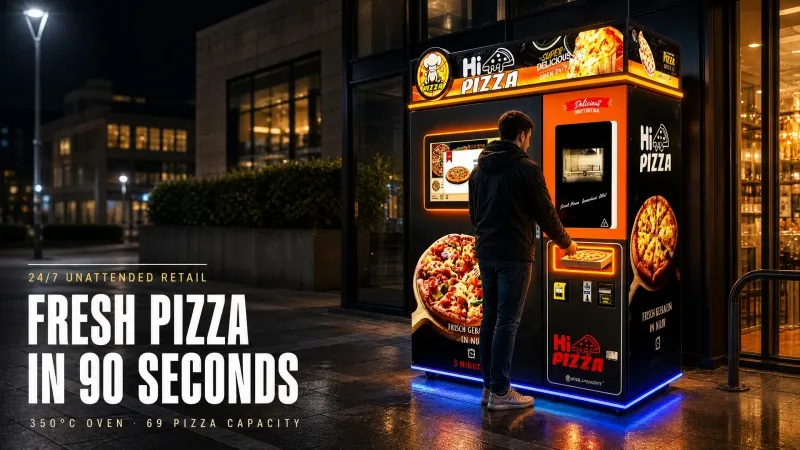
Working together, the two systems achieve what neither could alone: a pizza that is fully defrosted and properly baked in as little as 90 seconds, with the texture and aroma customers associate with a real pizzeria. The oven reaches temperatures of up to 350°C, giving operators the headroom to handle different pizza types and thicknesses without compromising on speed.
For a vending business, this translates directly into higher hourly output and better customer satisfaction — the two numbers that determine whether a location is profitable.
Cold Chain Integrity: Refrigeration and Defrost
A pizza vending machine is only as good as its cold storage. If the product is not held at a safe, consistent temperature, quality suffers and so does food safety.
Our machine maintains a refrigerator temperature of -10°C, keeping pizzas properly frozen across long operating hours. An integrated defrost function prepares the product for the oven cycle, so the machine can manage the transition from frozen storage to baked output automatically. This removes one of the most common failure points in automated pizza systems — inconsistent thawing that leads to uneven cooking.
Capacity That Matches High-Traffic Locations
Restocking frequency is a hidden cost in vending operations. A machine that runs out during peak hours loses sales and frustrates customers.
Our unit holds 69 pizza boxes, a capacity designed for locations where demand is continuous — airports, train stations, shopping malls, university campuses, and hospital lobbies. Fewer restocking trips mean lower labor overhead and more uninterrupted selling time. Combined with the fast bake cycle, the machine can serve a steady stream of customers without frequent intervention.
Safety at the Point of Delivery
Automated food machines operate in public spaces, often around children and crowds. The pizza outlet is the point where the customer interacts most directly with the machine, and it is where safety design matters most.
Our pizza outlet includes an anti-pinch function, protecting hands during dispensing while keeping the delivery process smooth and quick. It is a small engineering detail that has a large impact on customer confidence and on reducing liability for operators.
Technical Specifications
Item | Specification |
Pizza Size | 12 inch / 10 inch |
Pizza Capacity | 69 boxes |
Oven Type | Microwave + Hot Air Circulation Heating (Heating Tube, Oven Function) |
Oven Temperature | Up to 350°C |
Baking Time | As fast as 90 seconds |
Refrigerator | -10°C |
Voltage | 220V / 380V |
Power | 8700W |
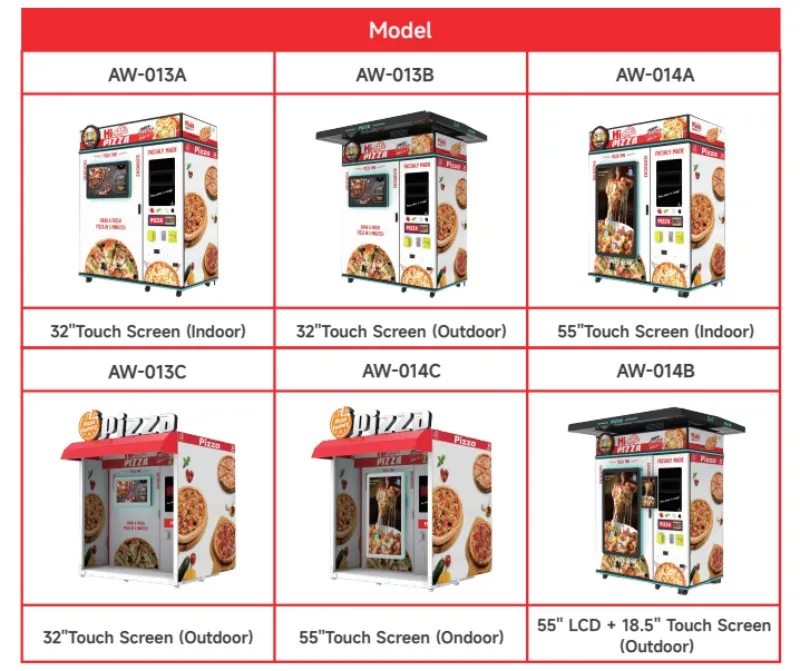
Touch Screen | 55" / 32" |
Weight | 650 / 700 / 850 KGS |
Models Available | 6 models |
Anti-Pinch Function | Yes (pizza outlet) |
Management App | Remote Android phone management App |
Payment Methods | WeChat Pay, Alipay, Coin, Cash, Bank Card |
Building a Brand, Not Just Buying a Machine
In automated retail, the machine is the storefront. Its appearance, language, and interface shape how customers perceive the brand behind it.
We offer full customization across logo, graphics, color, and language, along with OEM and ODM services. Operators can adapt the machine to local markets — different languages for different regions, different payment preferences, different visual identities — without changing the underlying hardware. For distributors building a network across multiple markets, this flexibility is what makes scaling practical.
Managing a Network From a Phone
Our machines support a remote Android management App, giving operators visibility into sales data, inventory levels, and machine status from anywhere. Instead of visiting each unit to check stock or diagnose issues, operators can monitor performance remotely, plan restocking more efficiently, and respond to faults before they cause extended downtime.
For investors running multiple machines, this is the difference between managing a fleet and managing a collection of isolated units. The App turns individual machines into a coordinated network — which is the foundation of any scalable automated food business.
Flexible Payment for Different Markets
Payment behavior varies widely by region. Our machine accepts WeChat Pay, Alipay, coins, cash, and bank cards, covering the payment methods that matter in both Chinese and international markets. This reduces friction at the point of sale and ensures the machine works for the customers it serves, regardless of local payment habits.
What Determines Profitability
Three factors drive the economics of a pizza vending machine: location, throughput, and operating cost.
Location determines demand. Throughput determines how much of that demand the machine can capture — and this is where the 90-second bake time and 69-box capacity make a direct financial difference. Operating cost determines margin, and with minimal staffing, compact footprint, and remote management, the cost structure is far leaner than a traditional pizza outlet.
Investors who evaluate machines on these three dimensions — rather than on price alone — are the ones who build sustainable automated food businesses.
Choosing a Manufacturing Partner
The machine is the product, but the manufacturer is the long-term partner. A supplier with real production experience ensures consistent quality across multiple units, not just a good sample. OEM and ODM capability allows you to build a differentiated product. And after-sales support — installation, maintenance, spare parts, technical assistance — protects the investment when issues arise.
For anyone entering automated pizza retail at scale, these factors matter as much as the specifications on the datasheet.
Final Thoughts
The pizza vending machine market is no longer about novelty. It is about technology that produces a genuinely good product, quickly and reliably, in locations where traditional restaurants cannot operate efficiently. Dual-oven heating, consistent cold chain management, high capacity, safety engineering, and remote management are what separate a profitable machine from an expensive one.
If you are evaluating pizza vending machine investment, start with the oven — because that is where the customer experience, and your return, is decided.
Explore more smart vending machine solutions at Iplaysmart Pizza Vending Machine Manufacturer.